
Sharkey Parole and Probation
Parole and probation can both place a person under Mississippi Department of Corrections Community Corrections, but they begin in different ways. Parole generally follows incarceration and release under parole authority. The Mississippi State Parole Board makes parole decisions. Probation is imposed by a court, often with a suspended sentence or after a shorter custodial term. A Sharkey County bond release is pretrial release, not parole or probation.
The legal source matters. The MDOC Parolees Search can show active parole. A sentencing or probation order from the Sharkey County court establishes probation. Community Corrections identifies the field office and verifies active supervision. None of those records should be read as proof of the exact hour the jail opened its door; that event belongs in the Sharkey County Sheriff jail docket.
| Point | Parole | Probation |
|---|---|---|
| How it starts | Release after incarceration under parole authority | A court sentence or order |
| Decision source | Mississippi State Parole Board | Issuing trial court |
| Public first check | MDOC Parolees Search | Court docket and signed order |
| Field confirmation | MDOC Community Corrections | MDOC Community Corrections |
| End record | End-of-parole or flat-time information, then removal from the public registry | Discharge or completion reflected by the court and supervising agency |
- Parole
- Conditional community release after incarceration under parole authority.
- Probation
- Court-ordered supervision that may accompany a suspended term or follow custody.
- ERS
- Earned-release supervision, a period outside the institution while the person remains under MDOC jurisdiction.
- Discharge
- The formal end of the sentence or supervision term, not merely departure from a jail or prison.
Verify Sharkey Post-Release Supervision
Start with an exact identity. The MDOC home page has separate Inmate Search and Parolees Search tools. Each accepts a first name, last name, or MDOC number. A person listed in Parolees Search is represented as currently on parole; a missing result may reflect a spelling issue, data timing, no parole, or the end of the public listing. Mississippi does not provide a matching public Probationers Search in the researched interface.
- Collect the full legal name, MDOC number if known, Sharkey case number, and sentencing court. Keep identifiers for matching rather than public reposting.
- Search MDOC's Parolees Search for parole. Compare the displayed name, image, paroled offense, and end-of-parole or flat-time information before choosing a match.
- For probation, obtain the signed sentencing or probation order from the Sharkey County Circuit Clerk or other issuing court. Read the term and conditions as entered.
- Contact MDOC Records or Community Corrections with the MDOC number and ask which field office serves the case. Do not infer an office from distance alone.
- If a warrant, violation, discharge, or return to custody is alleged, ask the issuing court or MDOC for the current official record. Do not rely on an absent search result.
The broader Sharkey County released-inmate search explains how to pair the supervision record with the Sheriff's physical release entry. That link is important when the question is whether someone left custody, rather than whether supervision continued afterward.
Important: A parole eligibility date, hearing, or grant is not physical release. Residence approval, detainer review, and MDOC processing may still remain.
Sharkey Supervision Office Assignment
No Sharkey County field office or county-specific reporting directions were published in the researched Community Corrections material. MDOC's facility map lists offices in Washington, Yazoo, and Humphreys Counties, but geography does not prove which office owns a particular case. Assignment can depend on the official residence, case status, and agency routing. Ask MDOC to identify the office by MDOC number before sending records or appearing in person.
MDOC RecordsP.O. Box 24388
Jackson, MS 39225
601-933-2889
MDOCRecordsDepartment@mdoc.state.ms.us
Official MDOC contact directory
Ask for the current Community Corrections field office, not a guessed nearest location. MDOC Records also handles questions about time, jail credit, and eligibility. Reporting instructions should come from the supervising office itself.
For a visual check of the state tools, the MDOC home page shows that inmate and parolee searches are separate.
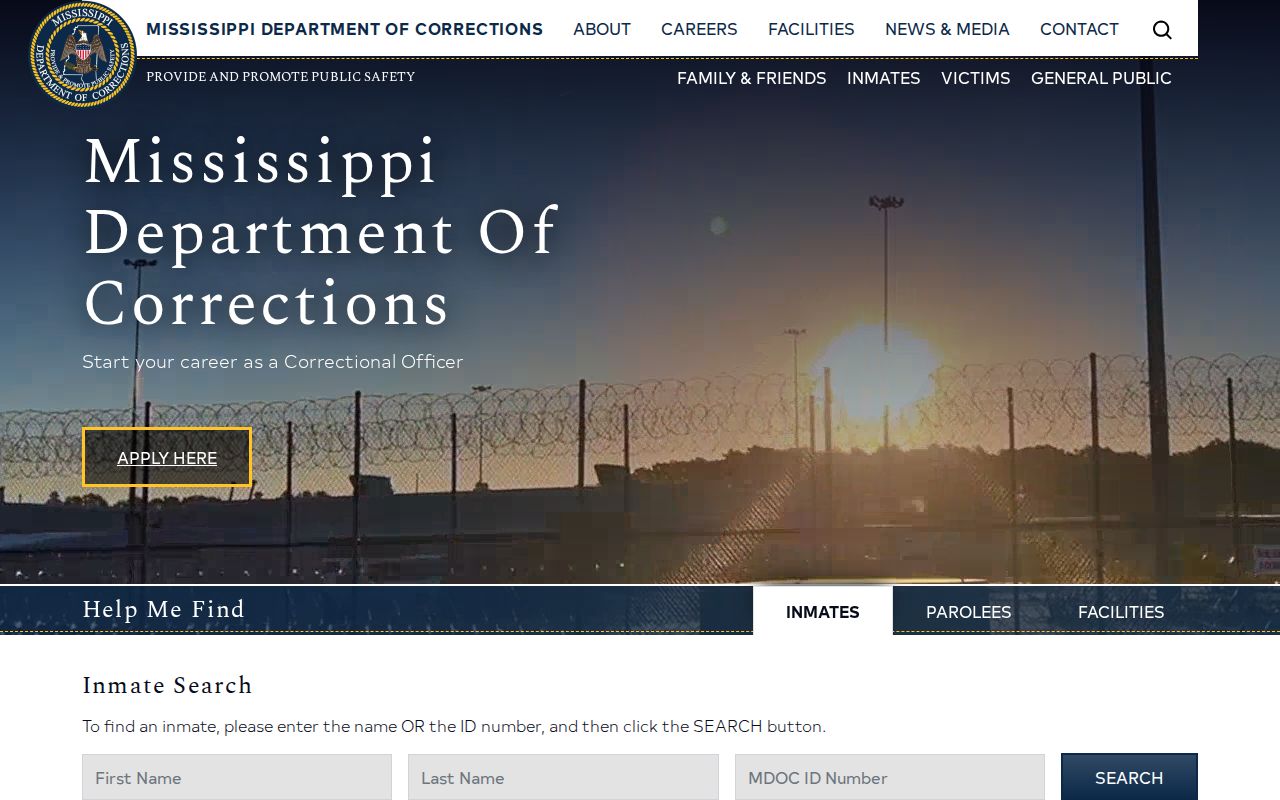
The separate widgets reinforce why an inmate record, a parole record, and a probation order should not be treated as one status.
Note: Field-office assignments and contact details can change, so confirm the serving office with MDOC before travel or document delivery.
Sharkey Supervision Violations
Conditions come from the governing order and supervising authority. They can include reporting, an approved residence, travel limits, and other case-specific duties. MDOC says an eligible person's proposed residence is reviewed before community placement, and an unacceptable or unapproved plan can affect release. The actual order controls. A summary from a search result cannot replace it.
An absconder is a person the supervising authority alleges did not remain available or comply. The term is not a new conviction. A warrant or revocation petition may lead to custody, but the relevant hearing and order determine the consequence. Sharkey County publishes no official county absconder or supervision-warrant list in the researched sources. Check MDOC and the issuing court, and avoid social posts that lack an agency record.
VINELink/MS SAVIN can send custody-event notices when a participating agency supplies them. It is not a supervision docket and does not verify every violation. A transfer notice also is not community release. Confirm the wording and event time with the listed custodian.
How Sharkey Supervision Ends
Leaving the institution is not the same as ending MDOC jurisdiction. MDOC describes earned-release supervision as continued offender status. Its official example for an eligible offense after June 1995 uses part of the sentence in a facility and a possible balance on ERS, but the calculation cannot be applied to every person. Offense date, sentence terms, exclusions, credit, and later action can change the result.
Mississippi Code § 47-7-5 calls for a public electronic parolee registry and removal when parole or flat time ends. That means an older parole record may no longer appear after supervision closes. Absence does not state the discharge date. Ask MDOC for the end record and compare it with any court order.
Probation ends according to the sentence, credited service, and later court orders. When exact proof is needed, request the discharge or completion record from the supervising agency and the issuing court. A jail release timestamp proves only the custodial event.
Sharkey Parole Hearing Records
The Mississippi State Parole Board decides parole matters. As of the research date, the official Board directory and current MDOC pages offered no public hearing calendar and no person-level results search. Historical minutes are not a current decision database. For a named person, provide the MDOC number to the Board and ask for the hearing date and recorded result.
Mississippi State Parole Board239 N. Lamar St., Suite 501, Jackson
601-576-3520
MSStateParoleBoard@mdoc.state.ms.us
The official sources disagree on the Jackson mailing ZIP, so verify it before mailing. Current statutes support grant and deny as core outcomes. A grant may still precede plan approval, detainer resolution, and release processing. A denial is not a new sentence and may lead to later consideration under the governing law.
Mississippi Code § 47-7-3 contains eligibility categories, timing rules, and exclusions that have changed over time. No one fraction fits all Sharkey County cases. Offense and sentence dates, violent or other statutory classifications, habitual status, mandatory terms, and multiple sentences can affect eligibility. Earned time does not reduce the statutory minimum for parole eligibility where the law bars that result.
The hearing cycle is person-specific, not a public monthly calendar. Sections 47-7-17 and 47-7-18 govern notice, cases that require a hearing, limited no-hearing criteria, denial procedure, and later consideration. Record the Board's actual wording. Do not convert eligibility into a grant or add an outcome label that the Board did not use.
The official Board directory documents the public contact point and the absence of a linked person-level search.
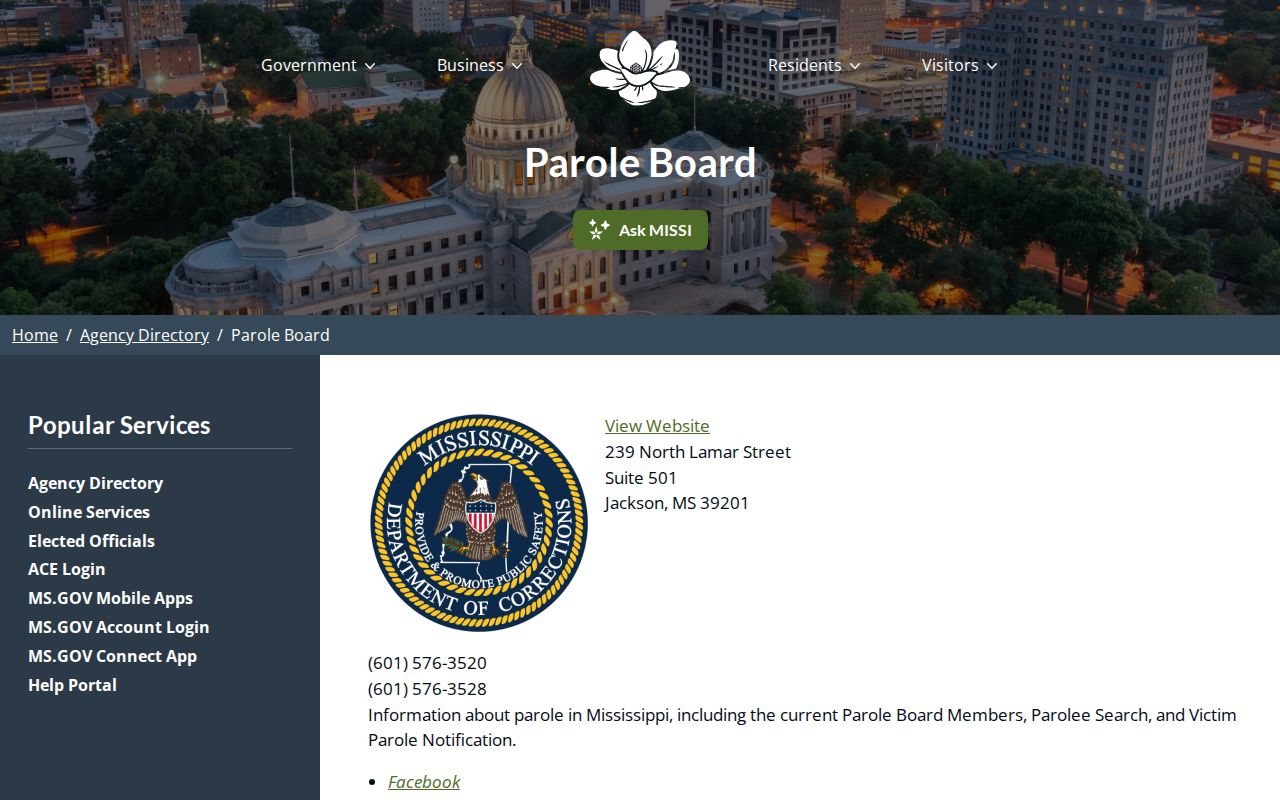
Use that contact for a hearing or decision question, then use Community Corrections to verify supervision after actual release.
Sharkey Release Record Corrections
A missing identification document and an error in a supervision or release record require different correction paths. The Mississippi Driver Service Bureau handles state identification and license replacement after release. It does not amend a jail entry, parole record, or judgment.
Raise an incorrect Sharkey jail release entry with the Sharkey County Sheriff. Take an error in a judgment or probation order to the issuing clerk and court. Ask MDOC to correct an MDOC status or supervision record. Each agency should address only the record it created; the Sheriff cannot rewrite a court order, and a licensing office cannot change the parole record.
Note: Keep copies of the disputed record, supporting order, agency response, and date of each correction request.