
MDOC Sharkey Release Scope
The Mississippi Department of Corrections operates the statewide prison and community-corrections system. Its facilities include state institutions and contracted placements. The official facilities map does not identify a current state prison in Sharkey County. A Sharkey County conviction therefore describes the court of origin, not where the person serves the sentence. Movement between MDOC institutions is a placement change within state custody.
MDOC becomes the key release source after a county prisoner is committed to the state. The Sharkey jail docket should record the transfer out of local custody, while MDOC records admission, location, time computation, supervision, and eventual discharge. If the person only had a local booking and never entered state custody, MDOC may have no record for that event.
| Question | Correct source |
|---|---|
| Did Sharkey County release or transfer the person? | Sharkey Sheriff jail docket |
| Where is an MDOC prisoner assigned? | MDOC Inmate Search |
| Is the person on active parole? | MDOC Parolees Search and Community Corrections |
| Was the state sentence discharged? | MDOC release document, certificate, or Records confirmation |
Search MDOC Release Status
The current MDOC home page presents separate Inmate Search and Parolees Search widgets. Both accept first name, last name, or MDOC ID. Use the MDOC number when known because it separates people with similar names. Review displayed identifiers before opening a match. The inmate tool and parolee tool answer different questions, and neither should be treated as a complete archive of every former state prisoner.
- Open the official MDOC home page and choose the widget that fits the status being checked.
- Search by MDOC ID when possible, or use the full first and last name.
- Compare identifiers and open the correct record.
- Record the exact status, location, sentence rows, and date labels without translating them.
- Request the time sheet or release document when the public result is absent or unclear.
The official MDOC search page shows the separate inmate and parolee entry points captured for this project.
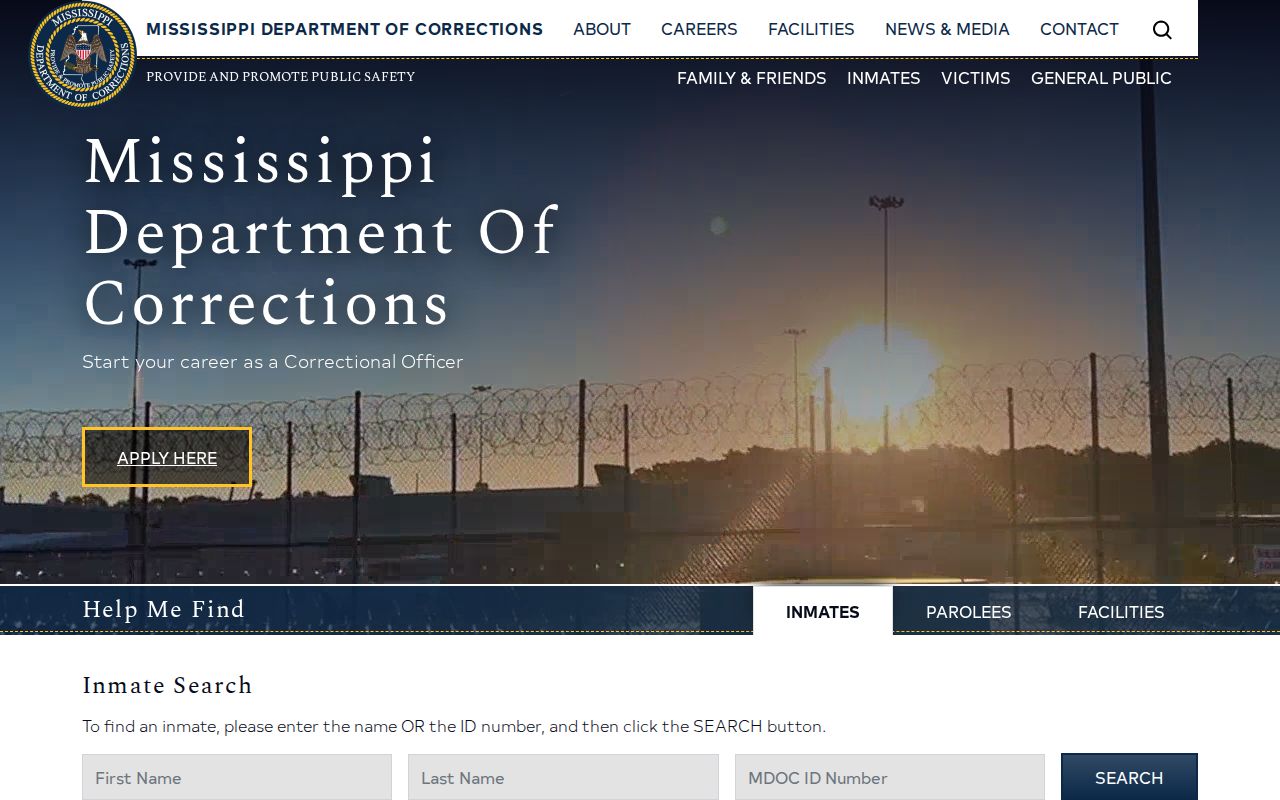
The image documents the search interface, not a fixed result or release status for any individual.
MDOC Release Record Fields
An inmate detail can show a name, MDOC ID, date of birth, physical description, entry date, location and unit, location-change date, sentence count and total length, offense-level sentence and county information, a photograph, and the label “Tentative Release Date.” Not every field appears in every record. A blank tentative date is not proof of release. Multiple sentence rows may also have different dates.
A future tentative release date is based on sentence information and credits known to MDOC at that point. It is not a guaranteed departure time. Concurrent sentences run together, while consecutive sentences run one after another; the controlling date can depend on that structure, jail credit, earned-time eligibility, forfeiture or restoration, court changes, and detainers. MDOC's time sheet is the better source for the calculation.
- Tentative release date
- A current MDOC calculation that may change; it is not a promise of release.
- Parole
- Community release under parole authority while the person remains under supervision.
- ERS
- Earned-release supervision, a form of continued MDOC jurisdiction outside the institution.
- Discharge
- The documented end of the state sentence or supervision term.
Request MDOC Discharge Records
For a completed or disputed event, request the specific state record. The inmate time sheet explains the calculation. The signed judgment and certified jail credit provide key inputs. A release document or discharge certificate addresses the completed event. MDOC's official guidance says an inmate must receive a discharge certificate before release, but the exact record needed depends on whether the person left an institution for parole, ERS, another hold, or full discharge.
Give MDOC Records the MDOC number, full name, sentence or county information, and a narrow date range. Ask for the current time sheet, credited jail time, eligibility information, and the release or discharge record relevant to the question. If a public result conflicts with a court order, do not choose one silently. Compare the signed judgment, certified credit, and MDOC calculation, then ask the agency to explain the discrepancy.
MDOC Records
Mail: P.O. Box 24388
Jackson, MS 39225
Phone: 601-933-2889
Email: MDOCRecordsDepartment@mdoc.state.ms.us
Purpose: Time, jail credit, and eligibility questions
Note: Confirm current contact details on the MDOC site before sending records or relying on a response deadline.
MDOC Release and Supervision
Leaving an institution may start supervision rather than end the sentence. The Mississippi State Parole Board makes parole decisions within its authority. MDOC Community Corrections supervises parole, probation, and other assigned statuses in the field. A positive Parolees Search result supports active parole, while absence can mean no parole, a mismatch, delay, or that supervision ended. The current public interface does not provide an equivalent general Probationers Search.
MDOC describes ERS as continued offender status under state jurisdiction. Its official example for an eligible post-June 30, 1995 crime uses 85 percent in the facility and a possible remaining 15 percent on ERS. That example is not a universal formula. Offense type, date, statutory exclusions, sentence structure, and later changes matter. Residence approval can also affect community placement.
For parole status, search the parolee widget and contact Community Corrections when needed. For probation, obtain the sentencing or probation order and ask MDOC which field office serves the case. No Sharkey-named office appears on the reviewed map, so do not assign a nearby office by guesswork. The separate Sharkey County Probation & Parole page explains that verification chain.
MDOC Facilities Outside Sharkey
The absence of a Sharkey County state prison is a useful fact. It prevents a county-of-conviction label from being mistaken for a current physical location. MDOC can place a state prisoner at an institution or contracted facility elsewhere in Mississippi. A later move may reflect classification, programming, medical needs, security, or bed assignment. None of those moves alone establishes release.
The MDOC facilities map is the official route for the system's current published locations.
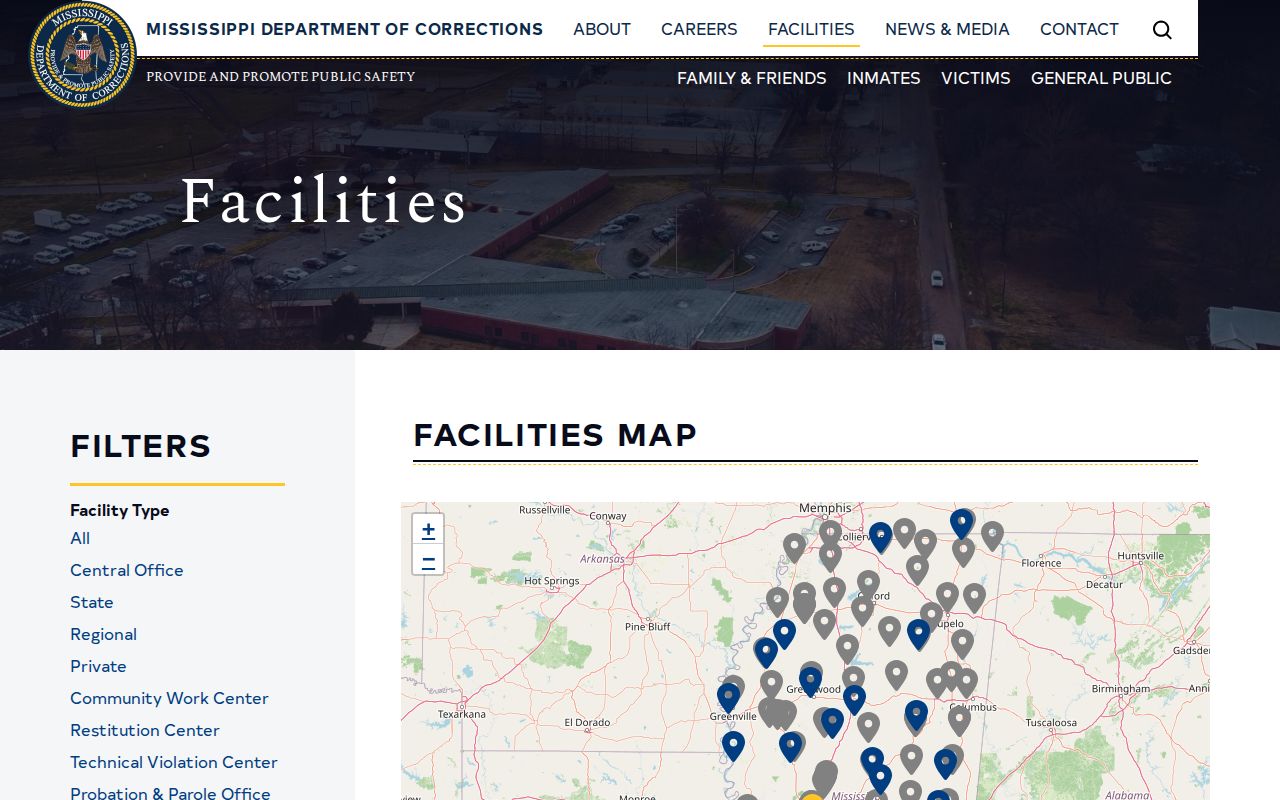
The captured map supports the statewide distinction. Always recheck the live map because facility listings and contracts can change.
Issaquena County Correctional Facility is a special caution. Statutory and historical sources establish a regional-facility background, but current public materials do not prove that it now holds Sharkey detainees. Verify a named placement with MDOC and the sending sheriff.
MDOC Release Date Limits
Mississippi Code Section 47-5-138 supplies the earned-time framework, with eligibility and exclusions tied to the actual case. Section 47-5-139 addresses forfeiture and possible restoration. A simple sentence-length calculation cannot replace an MDOC time sheet. Habitual status, mandatory terms, offense date, earned-time category, consecutive sentences, jail credit, a new detainer, or an amended judgment may change the result.
Parole eligibility under Section 47-7-3 is also distinct. Eligibility means the Board may consider the case. It does not prove a grant or physical release. Even a favorable decision can require an approved plan, hold resolution, and processing. Save the date of each lookup and describe a future value as projected or tentative.
Confirm an MDOC Discharge
A strong state-release conclusion uses affirmative evidence. A public status can orient the search, but the time sheet, release document, discharge certificate, and Community Corrections record define the later stages. A past Sharkey court judgment explains the sentence, while the Sharkey jail docket can show when county custody transferred to MDOC. Each source should retain its own date and role.
No match is negative evidence only. A fully discharged person may disappear from active inmate and parolee tools. Misspelling, delayed updates, and identity mismatch can also cause absence. Report “not found in the MDOC tool checked on this date,” then contact Records. Do not convert silence into proof that a sentence ended.
Identity matching is central to a state release check. Preserve the MDOC number, Sharkey court case number, and county booking number as separate identifiers. Compare the name, date of birth, sentence county, and offense rows before relying on a result. A photograph can assist comparison but is not conclusive identification. When two records appear plausible, ask MDOC Records to resolve the person by number rather than merging details from both profiles.
A final chronology can show county transfer, MDOC admission, institution moves, tentative dates, a supervision start, and discharge. Label each step with its source. This prevents an institutional move from looking like community release and keeps active parole or ERS from being described as the full end of state jurisdiction.